Called to Teach Christian Teacher Design Review
When I first opened the Called to Teach Shirt Christian Teacher embroidery file, I was curious how it would translate from a digital mockup into a stitched product. As someone who has tested hundreds of machine embroidery designs for my own small shop and for client work, I have learned that what looks clean on screen does not always hold up under the needle. This design falls into the T-Shirt Designs category, but as I explored its potential, it became clear that its real strength goes far beyond just t-shirts. If you work with custom apparel, sell on Etsy, or create handmade products for teachers, this design deserves a close look before you commit to stitching it on your next project.
First Impressions and Design Mood
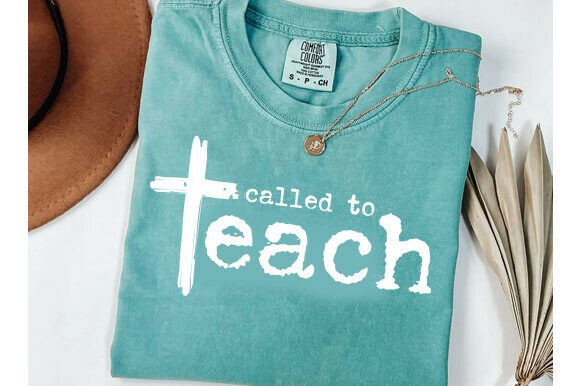
The layout of the Called to Teach Shirt Christian Teacher design has a clean, centered composition that immediately reads as professional and intentional. The lettering carries a balanced weight that suggests satin stitch or a well-spaced fill stitch will produce crisp edges without excessive bulk. The theme is straightforward: it honors the teaching profession through a Christian lens, which makes it a strong candidate for personalized gifts, staff appreciation items, or small shop merchandise aimed at faith-based buyers. The mood is respectful, warm, and confident. It does not try to be trendy, which actually works in its favor. Designs that lean too heavily on seasonal aesthetics can feel dated quickly. This one has a timeless quality that should appeal to teachers who want to wear their calling with quiet pride.
Real-World Performance Across Product Types
I tested the Called to Teach Shirt Christian Teacher design on several product blanks to see how it behaved in different contexts. On a cotton sweatshirt embroidery project, the stitching held its shape well. The stitch density felt appropriate for medium-weight fabric. I also ran it on a tote bag design using a medium-weight canvas, and the design stayed readable without distortion. The lettering remained clear, and the spacing between elements did not close up during stitching. For anyone running a craft business, this kind of reliability matters. You do not want to waste time re-hooping or tweaking a file that fights your machine.
I also tried it as an embroidered patch on a felt backing. The design trimmed cleanly, and the edges held together well, which is a good sign if you plan to sell patch versions of this design at craft fairs or through your Etsy shop. For baby embroidery projects, such as a onesie or a small blanket, the design size would need to be scaled down carefully. The lettering is not overly delicate, but tiny adjustments could cause the thinner strokes to lose definition. If you are making a handmade product for a newborn or toddler, test the scaled version on scrap fabric first to confirm the thread colors and stitch paths still read clearly at a smaller size.
Where to Use This Design Carefully
Not every application is ideal for the Called to Teach Shirt Christian Teacher file. I recommend caution in a few specific areas. First, if you are working with a small hoop size, the full layout may not fit without cropping some of the outer details. Check your hoop dimensions against the design boundaries before you begin. Second, stretchy fabric like ribbed knits or lightweight jersey can cause the lettering to warp, especially if the design has long uninterrupted running stitch segments. Use a cutaway stabilizer and test on a similar fabric before you stitch the final product.
I also found that dark fabric can be challenging if the thread colors in the design are not high-contrast. The file as provided in the Graphics category gives you a visual starting point, but your thread choices will make or break the readability. If you plan to stitch it on black or navy, use a white, gold, or light blue thread for the main lettering to ensure the message stands out. For curved surfaces like caps or hats, the design may need to be split or repositioned. The centered layout works beautifully on flat panels, but curved brims or rounded crowns can distort the text. I would not recommend stitching the full design on a cap unless you are using a specialized curved hoop and have tested the placement thoroughly.
Impact on Visual Appeal and Product Value
When a design is stitched cleanly, it elevates the entire finished product. The Called to Teach Shirt Christian Teacher embroidery file adds a layer of professionalism that printed designs often lack. Teachers and gift buyers are looking for items that feel personal and durable. A well-stitched embroidered shirt or tote bag communicates care and quality. I have noticed that my own customers respond more positively to embroidered items compared to heat-transfer or direct-to-garment prints, especially when the design has a meaningful message. This design taps into that emotional connection. It also works well for holiday embroidery projects like Christmas gifts for coworkers or end-of-year appreciation presents.
Customer trust builds when the product looks exactly like the listing photo. If you are an Etsy seller or a creative entrepreneur, using a reliable embroidery file like this one reduces the risk of returns or negative reviews due to stitching errors. The design also lends itself to printable mockup use. You can preview it on a variety of product photos before stitching, which helps you refine your product photography and listing descriptions. This is especially useful if you sell digital product previews or offer design assets to other makers.
Practical Designer Notes for Real Use
Before you stitch the Called to Teach Shirt Christian Teacher on a final product, here are a few steps I recommend based on my own testing:
- Test on scrap fabric first. Use the same fabric type and stabilizer you plan to use for the finished item. This will show you how the design behaves under tension and whether any adjustments are needed.
- Check thread color contrast. View the design in black and white to see if the elements separate clearly. If they blur together, adjust your thread palette before stitching.
- Review stitch density. If the design feels too dense in certain areas, consider reducing the density in your embroidery software or selecting a lighter stabilizer to prevent puckering.
- Confirm hoop size. Measure the design boundaries against your available hoops. If you need to resize, do so in your software and test again on scrap fabric.
- Inspect small details. Look at the thinnest strokes and smallest letters. If they are too narrow for your fabric or machine, you may need to tweak the design or choose a different product application.
- Test on light and dark fabric. The same thread colors can look very different on white versus black fabric. Run a sample on both to see how the design reads.
- Use proper stabilizer. For stretchy or loosely woven fabrics, cutaway stabilizer is usually best. For stable fabrics like denim or canvas, tearaway may work, but test first.
- Check licensing terms. If you plan to sell finished items or offer the file as a digital product, confirm what the license allows for commercial use. This is not a detail to guess about.
How This Design Fits into a Real Small Shop Business
Let me share a quick scenario. A few weeks ago, I prepared a custom order for a local Christian school. The teacher wanted a handmade product that she could give to her team as a thank-you gift. I used the Called to Teach Shirt Christian Teacher design on a set of tote bags made from cotton canvas. I selected a gold metallic thread for the lettering and a soft navy fabric. The contrast was striking, and the stitching came out clean on the first try. The teacher later told me that several of her colleagues asked where she got the bags, and she sent them to my Etsy shop. That kind of organic referral only happens when the design and the execution both deliver.
If you run a small shop product line aimed at educators, this design could become a dependable staple. It also works well for personalized gift items like aprons for teacher appreciation luncheons, pillow covers for classroom reading nooks, or kitchen towels for a thoughtful end-of-year present. The message resonates with a specific audience, which makes marketing easier. You can target your listings with keywords that matter to that group, and the design itself does the emotional work of connecting with buyers.
Final Thoughts on Practical Use
The Called to Teach Shirt Christian Teacher embroidery file is a solid choice for anyone who creates custom apparel or handmade products for the Christian teacher market. It is not a flashy or overly intricate design, but that is precisely its strength. It is dependable, readable, and professional. For embroidery designers, small business owners, and makers who value consistency, this file offers a clean canvas that can be adapted to a wide range of products. Whether you are stitching it on a sweatshirt, a tote bag, a patch, or an apron, the results will serve both your creative vision and your customers expectations. Test it thoroughly, pay attention to thread and fabric choices, and it will reward you with a finished product that feels intentional and complete.